Confidence Starts at the Crown: Mono Tops & Mono Parts for a Natural, Ready-to-Wear Look
This October, Confidence Starts at the Crown
October is Breast Cancer Awareness Month, a time to bring attention to breast cancer, support those affected, and recognize the many personal journeys that come with hair loss and hair changes.
For many people experiencing treatment-related hair loss, alternative hair can be an important part of feeling comfortable and confident during a time of change. But choosing a wig isn't only about finding a style that looks beautiful. Construction matters. The way a wig is designed can influence its appearance, styling options, comfort, and how easy it is to make the style feel like your own.
And while lace fronts often receive attention for creating a natural-looking hairline, they aren't the only way to achieve a realistic look.
In fact, a wig without a lace front can be exactly what someone is looking for.
If you prefer a ready-to-wear style, don't typically wear your hair completely away from your face, or simply want a traditional wig construction with a natural-looking crown, mono parts and mono tops offer another approach to realism.
This is where the magic happens at the crown.
What Makes a Mono Part Different?
A monofilament part, or mono part, features a section of fine monofilament material where individual fibers are hand-tied to create the appearance of hair growing directly from the scalp.
Unlike a traditional machine-made part, where fibers are attached in rows, the hand-tied construction allows the hair at the part to fall in a more natural direction.
The result?
A defined part with a realistic scalp appearance.

The important distinction is that a mono part is designed around a specific part location. It isn't intended to provide unlimited parting throughout the top of the wig—and that's not necessarily a limitation.
For someone who loves the way a particular style falls and doesn't need to constantly reposition their part, a mono part can provide exactly the right amount of realism without adding unnecessary construction.
Why Choose a Mono Part?
A mono part can be an excellent choice if you:
- Want a natural-looking scalp appearance at the part
- Prefer a specific left, right, or center part
- Like a polished, ready-to-wear style
- Don't need to change your part frequently
- Prefer a wig without a lace front
- Want natural-looking construction while keeping the styling simple
Think of it as intentional realism—the monofilament is placed exactly where it's needed.
Meet the Mono Part Styles

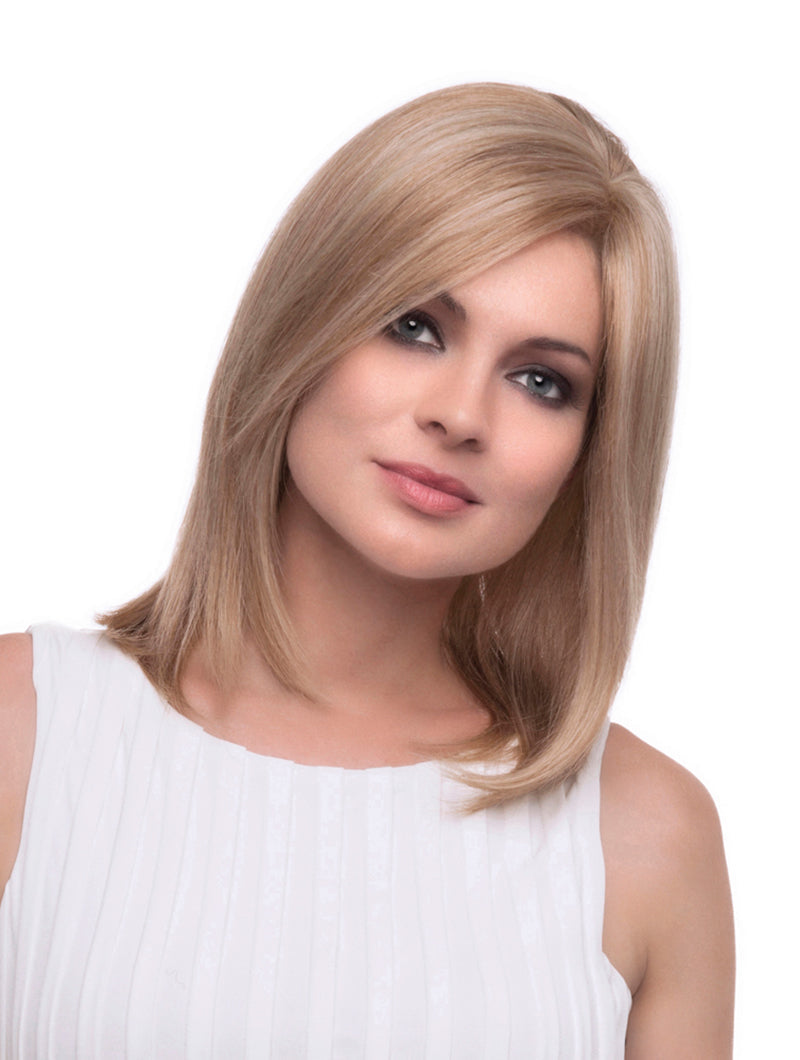
Nadia
Nadia demonstrates how a defined mono part can make a polished style look naturally rooted.
The part creates a visual break between the fibers, allowing the eye to see what appears to be scalp beneath the hair. This is especially effective when the style is worn close to its intended design.
Nadia's look can be kept sleek and polished or given a little more movement through gentle styling. The mono part provides the foundation for a believable crown without requiring a lace-front hairline.
Petite Nadia

Petite Nadia brings the same mono-part concept to a petite-sized silhouette.
For petite wearers, fit is an especially important part of achieving a natural-looking result. Even beautifully designed hair can look less natural when a cap doesn't sit correctly on the head.
A properly fitted petite cap allows the crown and part to fall where they were designed to sit, helping the overall style look more integrated.

Petite Paige
Petite Paige shows how a mono part can complement a more effortless, everyday look.
The designated part provides the realism at the crown, while the rest of the style is designed to be easy to wear without requiring extensive customization.
This is a great example of an important alternative-hair principle:
Natural doesn't have to mean complicated.
Sometimes the most natural-looking style is the one you can put on, make a few small adjustments, and wear confidently.
Mono Top: More Freedom at the Crown
If a mono part gives you realism in one designated location, a mono top expands that realism across a larger portion of the crown.
Individual fibers are hand-tied into the monofilament material, allowing them to move in different directions.
This gives you more flexibility when styling and, most importantly, more freedom to decide where you want your part to sit.

A mono top is particularly appealing for someone who likes to change their look without changing their wig.
Meet the Mono Top Styles

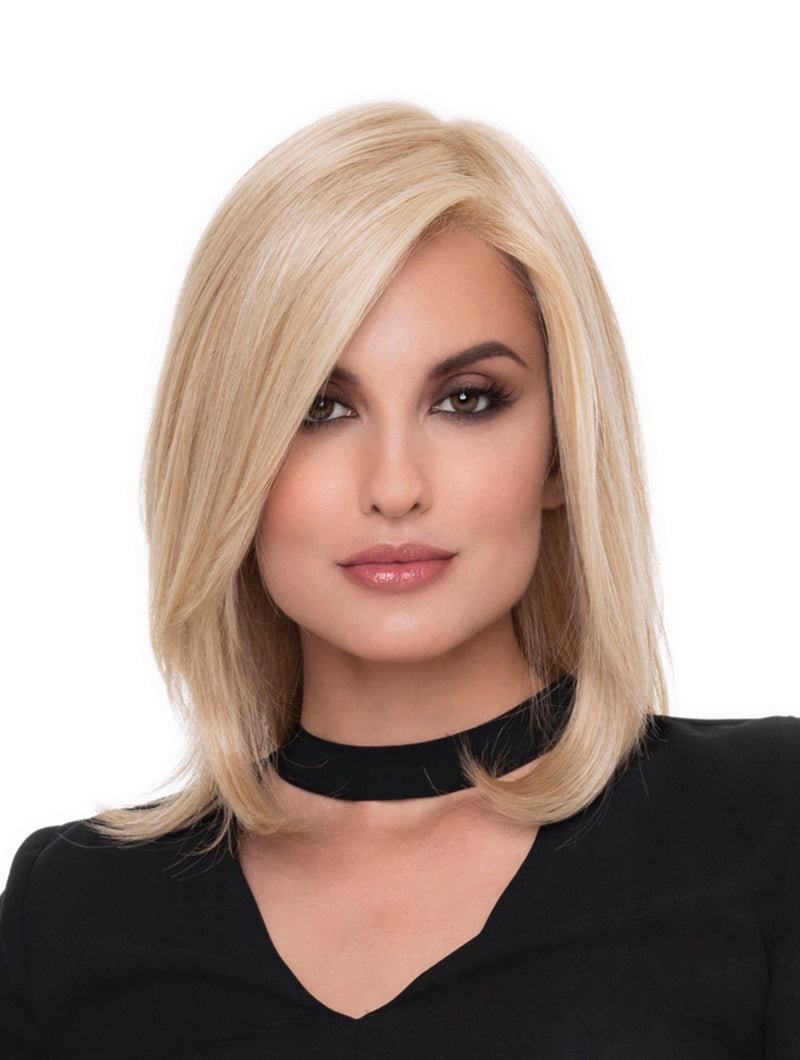
Haley
Haley is a great example of how a mono top can create a natural-looking crown while supporting a polished, wearable silhouette.
Because the monofilament extends across the top, the hair can be repositioned to create subtle changes in the overall look.
Try a soft off-center part for a relaxed finish, or bring the hair slightly forward for a fuller-looking crown.

Carley
Carley showcases the versatility of mono-top construction beautifully.
The ability to redirect the hair means you aren't locked into one exact interpretation of the style. A small change in part placement can change the visual balance of the entire haircut.
You can make the style feel:
- More symmetrical with a center part
- More relaxed with an off-center part
- Fuller on one side by shifting the part
- Softer by loosening the crown with your fingers
One wig. Multiple moods.
That's one of the biggest advantages of a mono top.

Madison
Madison brings the mono-top concept into a style that can be personalized through subtle styling changes.
The goal isn't necessarily to completely restyle the wig. Instead, think of the mono top as giving you the ability to make small adjustments that make a big visual difference.
Sometimes personalization doesn't require a dramatic transformation—it just requires the right foundation.
Insert any new stock photo of madison
And No, You Don't Always Need a Lace Front
Let's talk about one of the biggest misconceptions in wig construction:
A wig without a lace front isn't automatically less natural.
A lace front is designed primarily to create a natural-looking front hairline. It's an excellent construction choice for styles that are frequently worn away from the face, tucked behind the ears, or swept back.
But what if you don't wear your hair that way?
If your style naturally falls toward the face, has bangs or face-framing layers, or you simply prefer a more traditional wig construction, a lace front may not be necessary.
That's where a mono top or mono part can shine.
Think of it this way:
- Lace Front: Natural-looking hairline
- Mono Part: Natural-looking designated part
- Mono Top: Natural-looking crown + greater parting freedom
These aren't competing features. They're different solutions for different styling preferences.
Choosing a wig without a lace front can also mean fewer considerations around lace-front maintenance, blending, and positioning.
Instead, you can focus on the part, silhouette, density, and overall styling—the elements that matter most to how you actually wear your hair.
The absence of a lace front isn't something to apologize for. It's a design choice.
Caring for Your Mono Construction
Because the monofilament area contains individually hand-tied fibers, gentle care is especially important.
A few simple habits can help maintain the look and longevity of your wig:
Be gentle around the part.
Avoid aggressively brushing back and forth over the mono area. Start at the ends and work your way upward, using controlled, gentle strokes.
Don't pull on individual fibers.
If a fiber becomes tangled near the base, work the tangles out carefully rather than pulling directly on the fiber.
Use products made for alternative hair.
Traditional shampoos, conditioners, and styling products can contain ingredients that aren't ideal for synthetic fibers. Use products formulated for wigs and alternative hair whenever possible.
Keep conditioner away from the base.
When conditioning, concentrate the product on the mid-lengths and ends rather than applying it directly to the monofilament or other cap materials.
Let the wig rest.
If you wear your wig frequently, rotating between styles can reduce the amount of daily manipulation each individual wig receives.
Store it properly.
When not being worn, keep your wig on a wig stand or in an appropriate storage environment where the style can maintain its shape and the fibers aren't being crushed.
Confidence Starts at the Crown
Whether you're exploring alternative hair for the first time, looking for a wig during or after cancer treatment, or simply searching for a style that feels more natural and effortless, understanding construction can help you make a more informed choice.
It's about giving you the freedom to feel like yourself.